-
Real Life Happens In The Desert
I wrote a post in May 2022 entitled Out Of, Into which was inspired by the Biblical account of the Children of Israel leaving the bondage and slavery of Egypt and entering into the land promised to them by God. In the post, I talked about the importance of leaving old and unproductive things behind and taking the bold step of entering into something new.
According to scholars, the time from when Moses first spoke to Pharaoh until the Israelites left Egypt was roughly a year. That’s their “Out Of”. The time from when Joshua led them across the Jordan River until they had conquered Canaan was roughly seven years. This is covered in the Book of Joshua and is obviously their “Into”. The overwhelming majority of their time, forty years, was spent in the desert. In between. No Man’s Land. The DMZ. As it turned out for them; the crucible of their lives.
While most of the drama of their story, which led to those forty years, was self-inflicted there are real-life lessons in it for us just as in nearly every movie you’ve seen or story you’ve read. The central figure has a crisis and resolves to do something about it. They are met with resistance, fail and consider giving up, but somehow find strength to keep going. They reach their goal in the end. A beginning, a middle and an end. Egypt, the Desert, Canaan.
Imagine all those stories without the middle part. Luke Skywalker’s aunt and uncle are killed by Darth Vader. Luke kills Vader. The end. Connor MacLeod realizes he is an Immortal and is kicked out of the clan. Connor kills The Kurgan. The end. The cub, Simba is wrongfully accused by Scar of Mufasa’s death and leaves the pride. A grown Simba comes back and banishes Scar. The end.
Boring. Those aren’t stories, they’re news.
We admire what the hero or heroine has to go through – we root for them to make it – and we rejoice with them when they overcome impossible odds through sheer tenacity and stand victorious on their life’s battlefield.
But the stuff that makes a story a good story all happens in the middle. In the desert. In my non-movie, real-world experience it’s the part of my story where nobody is looking, no one’s even aware. Everyone sees the happy ending, and everyone wishes us well when we set out on our journey, but by and large we make that desert journey alone. I think God designed life that way because the middle parts of our stories are times of transformation. It’s a process, it’s usually painful and necessarily private.
David said “You knit me together in my mother’s womb…my frame was not hidden from you when I was made in the secret place, when I was woven together.” (Psalm 139:13,15) The desert is the secret place where we move out of what we were and morph into what we will become, the same way David described a baby being created in the womb.
One of the truths the desert has taught me is that it exists in my life because I can’t take the old guy into the new reality. Imagine whiney, bratty Luke fighting Vader, or baby Simba challenging Scar. It doesn’t work, it can’t work. They didn’t have the tools, skills, knowledge and most importantly, the experience that leads to the self-confidence required to succeed. In the same way, when we set our sights on higher endeavor, be it spiritual, educational, athletic, business or otherwise, the person we are must become the person we need to be to not just succeed but to thrive. That is a serious process that calls for some time in the desert.
Jesus said, “No one sews a patch of unshrunk cloth on an old garment. Otherwise, the new piece will pull away from the old, making the tear worse. And no one pours new wine into old wineskins. Otherwise, the wine will burst the skins, and both the wine and the wineskins will be ruined.” (Mark 2:21-22) New and old simply cannot coincide together, there must be a transformation somewhere in order for what was old to function in what is new. If you shrink the unused cloth, it’s able to patch an old garment. Wine fermentation releases forty times more CO2 than the actual juice that’s in the vat. That has got to happen outside of a wineskin before the wine can be useful and enjoyable. Jesus is simply stating natural truth that everyone of His day understood. If we’re going to move out of where we are, into where we want to be, we’re going to have to go through a process which involves two parts.
The first part must come first and it’s the most painful part of the process. This is the stuff we lose, the stuff we shed, the stuff we leave behind. Things we’ve grown attached to, ways of doing things, ways of thinking. People or places we’ve grown attached to. Things we need to unlearn and unbelieve; especially wrong thoughts and beliefs about ourselves. We will never become a better version of ourselves clinging to old versions of ourselves. And we certainly will never become a better version of ourselves by persisting in wrong thinking about ourselves.
As if the pain of this shedding process wasn’t enough, we almost always have to face the opinions of others. Detractors, deniers, doubters. Armchair quarterbacks are a dime a dozen and usually the loudest voices when we commit to our deserts. When we set out on our road, theirs are the loudest voices at the starting line. The good news is that they have no desire for desert life. Once they realize we’re committed to our road, they go back to the comfort of the starting line armchair, criticizing some other would-be desert road traveler and leave us alone. A good friend of mine once said of them, “Don’t tell me what color to paint the wall. Pick up a brush or sit down and shut up.”
Again, Jesus shows us the value of going through painful transformative processes by comparing them to basic, observable truths. “I am the true vine, and my Father is the gardener. He cuts off every branch in Me that bears no fruit, while every branch that does bear fruit He prunes so that it will be even more fruitful.” (John 15:1-2) Pruning is the painful aspect of increase, yet anyone who has ever grown anything in a garden understands its value. Pruning may hurt, but it does not harm. In fact, it strengthens and is a vital part of the process of enjoying really good produce. It’s just as true for becoming a better version of ourselves. Strategic pruning allows for exponential growth.
Today’s athletes are great examples. We are never shown the daily training regimen, the strict dietary discipline, the hours in the weight room, the early to bed, early to rise lifestyle. This is the process high achieving men and women voluntarily endure to go from also-ran to the top step of the podium. ESPN doesn’t get up at four a.m. to go on that ten-mile run every day with them. They do it in the dark, and they do it alone. All paths to excellence, becoming and great achievement run through the desert.
The second part of the desert process are the things we pick up. The things we add to ourselves; the improvements. Lessons learned, knowledge gained, routines perfected, muscles strengthened, talent deepened, focus sharpened. The things gained here are the one percent difference makers that James Clear brilliantly discusses in his book, Atomic Habits. These things only come by challenging the status-quo, by questioning what always has been and by asking what could be. Having set aside things that held us back, we’re free to focus on the only question that matters: How can I improve? and not quit until we answer the question.
This is why it’s so important to go through the painful pruning phase of our desert road. We’ve got to make room for new thoughts, new processes, new ideas, even new dreams. We’ve got to become open to ideas we’ve not considered and paths we’ve never explored. We’ve got to learn to hear from people who think differently than we do, developing open mindedness. We’ve got to turn over every stone, examine every possibility, consider every angle. Anything that can aid us in achieving our objective is worthy of consideration. This naturally involves a lot of trial and error. The amount of time and patience we exercise in this phase of the desert will determine the quality and excellence with which we emerge from it.
I’ve boiled it down to a simple formula that I intend to write a book about. I can, I will, I act, I am. Belief, Determination/Commitment, Action, Becoming. Simple formula, painful process. But oh so worth the price we pay to achieve it.
Deserts are uncomfortable. They’re hot during the day and frigid at night. There aren’t a lot of amenities around. Food and water can be scarce and the view pretty much doesn’t change from day to day, even from season to season. But the desert also has a few things going for it that will aid you on your road through it.
A desert is quiet; once the armchair quarterbacks at the starting line are out of earshot, that is. That gives us the opportunity to develop and practice stillness. Ryan Holiday’s Stillness Is The Key is a gem that anyone serious about transformation would do well to read. Stillness is the place where we can honestly consider the things we need to let go of and evaluate the things we need to take hold of on our road. I wrote a post called The Value Of Stillness that digs into this topic more deeply.
Deserts also have a lot of hidden beauty waiting for us to find, but aren’t visible until storms or desert monsoons blow through and produce a phenomenon known as “desert blooms.” Lying dormant, unseen, sometimes for months or years, these plants and flowers spring up from nowhere after these rains. They are also accompanied by a proliferation of insects and birds.
It’s a great visual to describe the emotional and mental storms we bring with us into the deserts of our lives. We’ve got to bring those things in with us, and we’ve got to unleash them and go through the struggle they produce, but when we do so with daring and integrity the results can be as magnificent as a true desert bloom. Do a Google search on “desert bloom” and click the images tab. You’ll be inspired.
Some desert journeys are short, some are long. Like the Children of Israel, we have a say in how long we stay there. Their mistake was whining and complaining which produced a bad attitude and ultimately led to quitting. After two years in the desert, as they were about to enter the land God promised, they allowed discouragement at the sight of enemies in Canaan waiting to be fought and the inability to see themselves as able to defeat them cause them to want to return to slavery in Egypt. They wasted their time in the desert. They didn’t lose the slave mentality of Egypt, neither did they gain confidence in the God of Israel who promised to deliver them into as mightily as he delivered them out of. That decision caused them to stay in the desert another thirty-eight years. The majority of those who left Egypt died in the desert having never realized the goal they left Egypt to achieve.
We all have an Egypt in our lives and a Canaan we’d prefer to live in. That land is promised to all, but only the ones who have the courage and commitment to walk the desert road from start to finish will get there. As Moses said to the Israelites; “This day I call the heavens and the earth as witnesses against you that I have set before you life and death, blessings and curses. Now choose life, so that you and your children may live.” (Deuteronomy 30:19)
I pray you’ll choose well.
-
Dog Is God Spelled Backwards
Have you ever wondered what it is about dogs that they’re given the title of “Man’s Best Friend?” They’re not the most intelligent – that award goes to the dolphin or chimpanzee, depending on whose research you accept. They’re not the most industrious, that would be the ant; and while they love to call shotgun on a ride in the car, I’d rather have a pigeon as my navigator than a dog. They’re not as useful as the horse or mule, they don’t provide sustenance like the cow, sheep or goat.
And yet, close to seventy million US households have a dog; between twenty and twenty-five percent of all American homes. Cats come in second at around forty-six million households. There’s just something about dogs and humans that connect in a special way, and I believe it’s by divine design.
Dogs love us and have the ability to communicate it in ways that are both tangible and fulfilling to the human experience. Dr. Gregory Berns, a radiologist, proved this by successfully conducting a series of MRIs on his dog, and then writing a book about his process and the results called How Dogs Love Us in 2013. You can also find him on YouTube explaining it in a 2015 TED Talk.
So, why do I make the claim that dog is God spelled backwards? Consider the following.
Have you ever met a dog that was beloved by its owners and well taken care of? The vast majority of the time that dog is going to show the same kind of love and friendship to complete strangers as to its owners. Dogs naturally crave the company of humans, the more the better! They love being in the center of what their people are doing, and to a dog the friend of my owner is my friend too!
In the book of Exodus, God describes Himself to Moses in this way: “The LORD, the LORD, the compassionate and gracious God, slow to anger, abounding in love and faithfulness, maintaining love to thousands…” Throughout scripture, God states that His greatest joy and delight is having relationships with the children He has created. There is no greater satisfaction to Him than a loving relationship with His kids. Jesus died on the cross to prove it.
Anyone who has ever owned a dog will tell you they are faithful and loyal companions. Where you go, they go, what you do, they want to do also. Dogs bond with their humans and find nothing more interesting than being involved in whatever they are doing. When we sit and rest, our pups will too. When we get up to move around, they’ll get up and follow. When we have to leave them, they feel lonely; when we return, they show their excitement and joy at seeing us again with wagging tails and wet tongue kisses.
God makes promises in His word to us like “It is the Lord who goes before you. He will be with you; he will not leave you or forsake you. Do not fear or be dismayed.” (Deuteronomy 31:8) “I am with you always, to the end of the age.” (Matthew 28:20) “Do not be frightened, and do not be dismayed, for the Lord your God is with you wherever you go.” (Joshua 1:9) “Even though I walk through the valley of the shadow of death, I will fear no evil, for you are with me.” (Psalm 23:4). He is a constant companion, a ready guide, a “friend that sticks closer than a brother.” (Proverbs 18:24).
Dogs are incredibly intuitive at an emotional level. When you’re down, they sense it and turn on the sweetness and cuddles. They stay even closer to us than normal. They have an ability to dial up their love toward us when we’re at our lowest. They will seek us out in our low moments to offer their comfort and care. They don’t do anything. They just be there; with us and for us.
I think about Hagar alone, rejected and friendless (Genesis 16), the socially outcast woman at the well (John 4), Joshua petrified at having to lead the children of Israel after the death of Moses (Joshua 1), God hearing the cries of affliction from the Israelites in Egypt (Exodus 3). Story after story in the bible where God comforts us in our times of hurt, pain, sorrow, frustration and anguish. From His heart of love for us, there could only be one response. Comfort.
While dogs have big hearts of love for everyone, they will guard and protect their people and even property with ferocity if needed. Some dogs are specifically trained for this purpose, but the training builds off of what is already natural. Some dogs have shown extra protection for babies and small children. They see themselves not only as part of the pack, but the main protector of the members of the pack. If you want to hurt a member of the pack, you’re going to have to go through them to do it.
The bible is filled with stories of God’s protection in times of trouble. Shadrach, Meshach and Abednego in the fiery furnace (Daniel 3), the children of Israel crossing the Red Sea to escape the pursuing Egyptians (Exodus 14), Hezekiah and the Assyrian army (2 Chronicles 32). “Because he loves me,” says the LORD, “I will rescue him; I will protect him, for he acknowledges my name. He will call upon me, and I will answer him; I will be with him in trouble, I will deliver him and honor him.” (Ps 91:14-15) “But the Lord is faithful, and he will strengthen you and protect you from the evil one.” (2 Thessalonians 3:3) “Because the poor are plundered and the needy groan, I will now arise,” says the LORD. “I will protect them from those who malign them.” (Psalm 12:5). He describes Himself as an ever-present help in times of trouble. (Psalm 46:1)
Dogs can be trained to be guides for the blind. God says “I will instruct you and teach you in the way you should go; I will counsel you with my loving eye on you.” (Psalm 32:8)
Pet therapy is known for lifting spirits and lowering blood pressure when patients interact with the dog. They’re naturally healing. God says “If you listen carefully to the LORD your God and do what is right in his eyes, if you pay attention to his commands and keep all his decrees, I will not bring on you any of the diseases I brought on the Egyptians, for I am the LORD, who heals you.” (Exodus 15:26)
You could go hours and days without interacting with your dog, yet he will be right there ready and waiting to be with you when you come back to him like no time was ever lost. Isaiah 30:18 says “So the LORD must wait for you to come to Him so he can show you His love and compassion. For the LORD is a faithful God.”
When we call to our dogs, they come running with excitement at the prospect of doing something, or just being together. God says “He will call upon Me, and I will answer him” (Psalm 91:5), “Call upon Me in the day of trouble; I shall rescue you” (Psalm 50:15), “Then you will call, and the Lord will answer; you will cry, and He will say, ‘Here I am’” (Isaiah 58:9).
“He is the Maker of heaven and earth, the sea, and everything in them.” (Psalm 146:6). Everything God made, He made for a purpose. Everything has a role, a function and a reason for being exactly what it is and how it is.
I believe – among many, many other ways (see Psalm 19) – that God created dogs to be companions to us to show us what He is truly like. His love, His tenderness, His faithfulness, His loyalty toward us. He is compassionate, understanding, caring, giving. A dog asks for nothing but our love. If they make a demand upon us, it’s for our time, our attention, our friendship. They just want to be with us and share a life together with us. Nothing more than that. Their whole existence is wrapped up in giving and receiving love with us.
Just like God. He created us to have fellowship with Himself. Not to use us as slaves, servants or beasts of burden. God longs to call us friends (John 15:15), sons and daughters (2 Corinthians 6:18), co-laborers with Him (1 Corinthians 3:9). All He wants, like any parent with their child, is a relationship based on mutual love and respect.
I started writing this post while my dog Sherlock was alive. I was thinking of all ways over the seventeen years we were together that I saw the love of God through how he loved and adored me. Sadly, he passed away in early September and left a hole in my heart. He embodied many of the things I’ve come to see in God. Love, faithfulness, loyalty, companionship, understanding, support, friendship and protection. He will be missed.
One last way that dogs are like God. God is a restorer of broken hearts; “He heals the broken-hearted and bandages their wounds.” (Psalm 147:3) Sherlock did all the healing he could do. He has finished his race. I believe all dogs really do go to heaven.
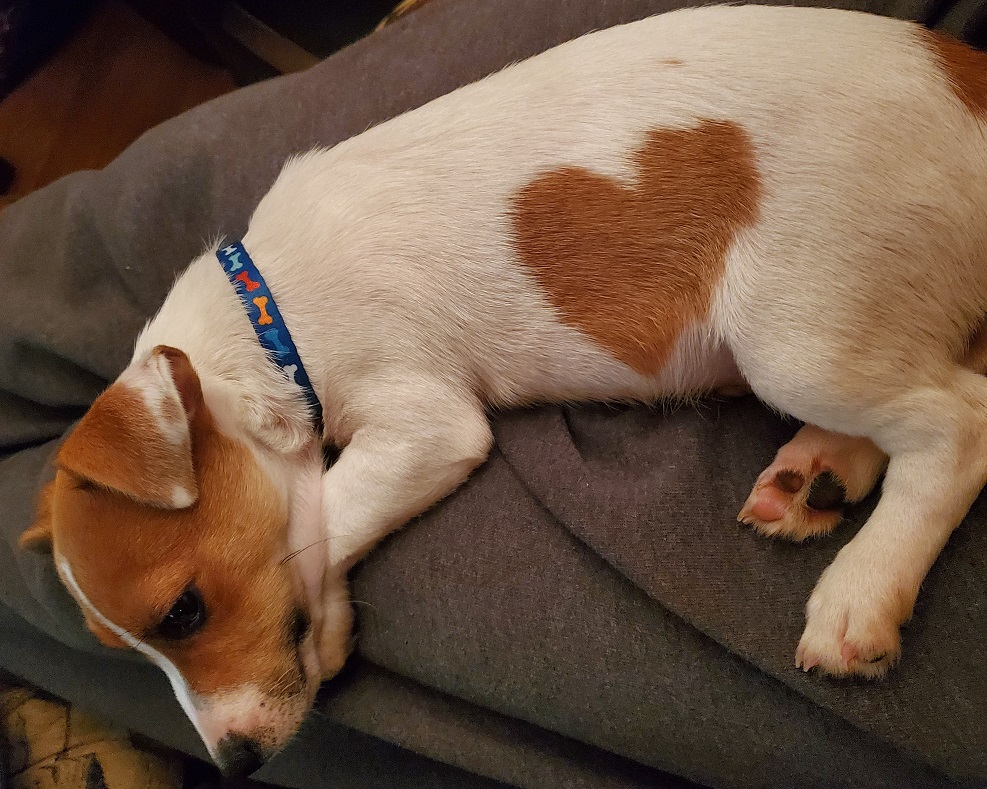
But taking his place is Watson. He’s only been with me for a week, and already he feels like a friend I’ve known for years. And because He knows the sorrow of loss on a personal level, God sent him with a special reminder of the love He put in dogs to remind us always of His love.
-
Why Stars Matter
I have been fascinated by stars, planets and outer space since I was a little child. Maybe it was because Neil Armstrong landed on the moon days after my fourth birthday, I’m not sure. But when I was six and had a choice between a bicycle and a telescope for my birthday present, I took the ‘scope and never regretted it!
There is a story in the Bible that features stars that my thoughts are drawn to often. In the book of Genesis, the fifteenth chapter, God appears to Abraham (Abram at the time) and says, “I am your shield and your exceeding great reward.” In other words, “I will protect you and whatever you need, you can have it by asking Me.”
I’m blown away by the offer. The God of all creation basically saying, “I’ve got your back every way you need it.” Even more mind blowing is Abraham’s response: “What can You give me, since I remain childless…”. Wow. In other words, “thanks, God, but if You can’t give me a child, there’s nothing you’ve got I care to ask for.” I don’t know whether to be more shocked by his boldness to come right out there with it, or by God’s loving and generous response to it. In verse four of the same chapter, God promises Abraham: “…a son who is your own flesh and blood will be your heir.” Here’s where the stars come in. Then God says, “Look up at the sky and count the stars – if you can; so shall your offspring be.”
It might be difficult to grasp this demonstration God is trying to get across to Abraham in our air polluted, light polluted modern skyline. I’ve been in the Negev of Israel on a kibbutz where they turn the power off at night. The sky lights up so brightly you can safely see to walk without the aid of the moon. You would have to see it with your own eyes, but having done so, for me it makes the creation story of stars in Genesis chapter one more understandable. In verse fifteen, speaking of them as He was creating them, God said, “and let them be lights in the vault of the sky to give light on the earth.” And it was so. It still was on that autumn evening in Israel in 1990 and it still is to this day.
The Bible lets us know that God made this promise to Abraham when he was seventy-five years old, and when he was one hundred, Isaac, the promised heir was born to Abraham by Sarah, his wife. For twenty-five years, Abraham must have looked up in that sky at those stars and recalled God’s promise. Genesis 15:6 says that he completely believed God when He promised.
Fast forward some number of years when God again speaks to Abraham in Genesis chapter twenty-two and tells him to “take your son, your only son, whom you love – Isaac – and go to the region of Moriah (modern-day Jerusalem where the Hebrew Temples stood in Bible times). Sacrifice him there as a burnt offering on a mountain I will show you.”
I can’t imagine Abraham’s initial thoughts and emotions at such a request from God. The thing he wanted most, the thing he said if God didn’t give him, nothing He could give him would much matter to him – God was asking Abraham to give that up as an offering. When I quiet my mind and try to put myself in Abraham’s place, tears come to my eyes. How soul crushed he must have felt. Not to mention the seeming inhumanity of the request. By all appearances it went against everything Abraham must have thought and believed about God.
What is more astounding to me is after God’s request to Abraham, the very next verse – verse three – in chapter twenty-two of Genesis says, “Early the next morning Abraham got up…”. From everything the Bible recounts to us, he wasted no time in obeying God. It absolutely staggers my imagination.
Remember those stars? While the Bible doesn’t say it, and I’ll never be able to prove it, I am willing to bet that Abraham didn’t get a lot of sleep that night. I’m willing to bet he sat out in front of his tent with the household and the servants asleep. The animals all fed and resting in their pens and stalls – everything hushed beyond quietness and settled into absolute silence. And he stared at those stars. Maybe he even tried to count them. God knows, that’s what I’d have done. Just trying to understand, to get past the “why’s” and “how’s” that his daddy-heart had to be screaming in his mind.
What happened between that night and the next morning? We will never know because the Bible doesn’t tell us. But for twenty-five years, he looked up at those stars every single night of his life. It only rains about an inch a year in the Negev; there aren’t a lot of cloudy days, and twenty-five years is over nine thousand nights of looking at stars beyond measuring.
I believe that fateful night in question was the least glorious and most stressful night of them all. Nine thousand times he looked up and remembered God’s promise, maybe even offered a trusting prayer of thanksgiving for the child yet to be born with joyful anticipation in his daddy-heart. But this night. I can’t imagine the torture.
Until…
Something changed inside of Abraham as he stared at those stars. Something broke in his heart of hearts. He remembered not just the asking of God, but the God of the asking. More importantly, he remembered the God of the promising. He remembered His goodness in fulfilling His promise. And I think he settled something there before God and His stars. I know he did because he got up the next morning and saddled up his donkey, took two servants along with his son and set out. He didn’t have the stars anymore, but he had something bigger. He remembered what the stars meant: “A son who is your own flesh and blood will be your heir. Look up at the sky and count the stars – if you can; so shall your offspring be.” He didn’t need to see the stars on the outside anymore, they were settled in his heart and in his mind. Those stars were brighter on the inside of Abraham than they could ever be to the eyes. God was either the God of promise, or He was a liar, and Abraham bet everything on the former.
There are only two recorded statements that Abraham made on the way to sacrifice his son to God. The first was when he told the servants to “stay here with the donkey while the boy and I go over there. We will worship and then we will come back to you.” The second was when Isaac noticed that Abraham had brought wood and fire only and asked, “where is the lamb for the burnt offering?”, to which Abraham replied, “God Himself will provide the lamb for the burnt offering, my son.”
I cannot tell you exactly what happened on that last night outside his tent, before the stars in Abraham’s heart. There is no record of God speaking to him, comforting him, or aiding him in any other way after making His request. Between that night and the three-day journey to the mountain, Abraham had settled to his satisfaction that God would honor His word. His own speaking proves it. WE WILL come back to you. GOD WILL provide the lamb.
We know the end of the story; the angel of God stayed Abraham’s hand. As Abraham had prophesied, a ram was caught in a thicket and he sacrificed him to God, and Abraham and Isaac returned to the servants and went back home.
I’ve had to settle some things in my heart concerning promises God has made to me. I’ve had to endure some difficult, sleepless nights; worrying thoughts and anxiousness. I’ve wondered whether some things in my circumstances would ever change. Things I have believed for, dreamed of for so many years – even decades. Sometimes, the weight of those anxious moments felt so crushing, I just wanted to run away from everything.
But just recently, I looked up at the stars again. No, not literally like Abraham might have done. The promises God has made to me. Things He has said, things he has shown me. And then, I looked past them. And I saw Him again. It is so easy to get bogged down in the promises of God. Sometimes, we end up forgetting the God of the promises. We pine and fuss and kick and moan in our impatience and selfishness – at least I do. But there, all along He was waiting. “…for the Lord your God goes with you; He will never leave you, He will never forsake you,” He promises this in the book of Deuteronomy.
So I challenge you, dear reader, today. Look up at the stars tonight, however many and however bright they may be. If you can’t see them all, it’s okay – you know they are there. They aren’t the important part. Once you’ve given them a really good looking over, then look past them. Look to the One who made them. They are lights in the sky to give light on the earth. His light, His promise, His wisdom, His provision, His assurance. He didn’t leave Abraham, He hasn’t left me, He hasn’t left you.
He never will.
-
Overfunctioning and Vampires
Overfunctioning is a term that I have recently discovered because it is a behavior I have been guilty of practicing and one I am working on overcoming. At its core, it means doing way too much, or taking on more than is want or necessary, but in practice it is so much more than that. This is because overfunctioning happens in relationships. It happens both in casual relationships like work or business as well as personal relationships like family and friends.
Psychologists identify overfunctioner and underfunctioner roles in relationships. You can learn more about that through a google search. Since this blog is chronicling my path and I tend to overfunction, that’s what this post is going to focus on.
In relationships, overfunctioners step in to fill gaps that they feel shouldn’t be there. Their intention is to pick up slack, to lend a hand, to help out and even to get a critical task done that others are failing to do. I think of over functioning as being either active or passive. Psychology does not classify it in this way, so understand that this is my definition and I am not a professional!
I see active overfunctioning as being a busybody. We’ve all seen people like this. They know, they’ve experienced, they’ve heard, they’ve read; and so they swoop in with their advice, critique and direction to lead and guide you to the proper way to do whatever the need or task at hand is. They are bossy know-it-alls and tend to be among the most annoying humans that we have to interact with. They don’t listen and they can’t hear because they already know it all. It’s great that you have an opinion, now kindly move out of the way and let the professionals direct the show. I run from people like this. I think most of us do.
I want to talk about passive overfunctioning, which I truly believe is the majority of overfunctioning that goes on in the world. I say this based on personal experience as well as observation of others; or maybe I’m just biased. Passive overfunctioners quietly get things done. They see a need; they meet the need. If they’re asked, they step up to help. They view the world in terms of what they can do to make it better.
You can ask a passive overfunctioner to help over and over and they’ll almost always say yes every time. On those rare occasions when they do say no, they’ll feel so guilty that they’re likely to look the asker up later to see if there’s something they can help with now, since they couldn’t then.
They are well meaning, big hearted and givers at their core. They see part of their mission in life as being helpers, especially to those who are in need and they receive genuine fulfillment when they’re able to make a difference in someone’s life. They’re not pushy like the active overfunctioner, they’re just ready, willing and able when called upon. They will often offer, but they will accept a ‘no thank you’, unlike their active opposites.
However, passive overfunctioners have to be on guard against a few personality traits that can draw them toward their overfunctioning. A very common one is the need or desire to be liked, approved of and thought well of. Their self-worth can come from the approval and opinion of others rather than from their own self-valuation. It was a major step for me when I accepted that I had worth and value intrinsically and not because I performed in a certain way or was approved of by anyone else. I define me and my value, not anyone else.
Passive overfunctioners can also draw their self-esteem and worth from that feeling of being needed. They self-validate from the feeling of having purpose or being wanted. They can be lethargic and despondent, having no compass within themselves until the joy of being called upon arises. Instead of having their own internal purpose that leads them to actions which produce positive self-feelings and thoughts, they reflect off of others’ need of them.
In conjunction with an excellent therapist, I learned these lessons, ironically enough from the vampires in my life. Overfunctioners – duh – over function. Underfunctioners live below their capabilities. Vampires are a totally different breed. They are selfish, self-centered, narcissistic takers. They live to drain you dry and move on to the next willing victim.
Vampires all have the same basic traits in common, it’s only their methods that differ. First, a vampire cannot see its reflection in a mirror; they have no self-image. They have no ability to obtain one, so they feed off of others. They are drawn to their victims like moths are to light because they have no ability to source from within themselves. They are massively insecure, which they mask by spending most of their time talking about you, but never themselves. They lure you in by appearing to be caring and interested and once you’re hooked, they can feed.
Secondly, vampires do not have the ability to feed themselves. They can only feed off of others. They suck the life out of you for their own sustenance. Since they have no self-image, they cannot self-source well-being, security or comfort. They have no way to self-soothe because they can’t identify their self. They wouldn’t know it if they could see it.
Third, vampires are deathly afraid of the light. Everyone around them can see them for who and what they are, but try to explain to a vampire how and why they are a being vampire and they simply won’t hear it. In order for a vampire to accept correction, they’d have to be able to self-assess and self-evaluate. Since they have no sense of self – they can’t accurately see themselves – they can’t accept stern rebuke, much less constructive criticism. They’re quick to point fingers at anyone but themselves and find fault anywhere but within. Vampires always look for someone else to make a wrong right, since they themselves are incapable of doing wrong.
Which is why passive overfunctioners are the tastiest food a vampire can sink their teeth into. Overfunctioners love to give, and vampires live to take. As a wise man once said to me; “When you live your life as a giver, some people will treat you like an ATM.” You don’t see a lot of deposits at ATM’s, just withdrawals. Vampires will wear out a debit card sucking the life out of you.
A vampire will stroke a passive overfunctioners ego by telling them how special they are. How they don’t know how they’d make it without them. How valuable they are and how grateful the vampire is to have them in their life. All of this is exactly what we want to hear. We are born to want to give the vampire exactly what it needs, and it’s asking so nicely, and it’s so well meaning and it needs us! We naturally rise to the occasion and derive immense satisfaction from being able to be there for them.
We begin to wake up when we realize that the flow of giving has only been moving in one direction; away from us and toward the vampire. No matter how hard wired we are to give, at some point we just run dry. In one relationship, I remember telling my therapist that I was just plain “gived-out.” I had nothing left in the tank. When we ask for something in return, in my experience, a vampire will either make whatever promise they have to in order to keep their supply coming and will never deliver, or they will turn the tables and call us selfish and self-centered for asking or making demands from them.
In the movies, they drive a stake through the vampire’s heart to kill it. If you’re keen to avoid a lengthy prison sentence, I can offer a real-world alternative. It will throw a vampire into total confusion, and if you practice it correctly, it will banish them to the darkness from whence they came. It’s one of the most powerful words in the English language, and it is close to being a four-letter word for a passive overfunctioner:
NO.
That’s it. Just no. Just say no. Vampires HATE no. Thanks to Dr. Needra Tawab and her outstanding book, Set Boundaries, Find Peace: A Guide to Reclaiming Yourself, I’ve learned the wonderful healing power of the word no.
No doesn’t make me a bad person, it doesn’t change me from a giver to a taker, it doesn’t make me selfish and it doesn’t mean I’m denying my true self. It means exactly the opposite. I am valuing myself. I am valuing myself enough to no longer be a source of supply for a vampire who has no interest in a give-and-receive relationship, but only lives to feed off my kindness and generosity.
I am worth – and if you see yourself in this blog post – you are worth being the fullest and truest self you can be. Our giving can only be truly rewarding when a joyful and grateful recipient benefits from it. Giving become a laborious hateful task when it is sucked up by a vampiric taker.
The worst thing I could imagine is if instead of reclaiming myself, as Dr. Tawab says, I sunk into the bitterness of being used and taken advantage of, and in angry self-protection refused to come back out of that shell of safety and be a difference maker in a world that is desperate for more of us.
I am grateful that I’m learning to value myself enough to say no and pull away from vampires before they have the chance to suck all the life out of me. I am grateful that I have found the power to direct my giving toward receivers and away from takers.
-
The Harder Road
God is full of love for us and only permits trials to come our way for our own good.
-Brother Lawrence, Practicing The Presence Of God, 1691When He led the Israelites out of Egypt, through the desert into the Promised Land, Exodus 13:17-18 says ‘…God did not lead them on the road through the Philistine country, though that was shorter. For God said, “If they face war, they might change their minds and return to Egypt.” So, God led the people around by the desert road toward the Red Sea.’
I have to imagine the thoughts of the people as they made a right after crossing the Red Sea, rather than a left. They would have gone south, around the mountains in the lower Sinai Peninsula rather than directly north toward the Mediterranean Sea. It’s not known whether the Children of Israel knew why God was sending them this way or not, but given the complaining and murmuring described in the book of Exodus, I rather imagine they did not.
Many times in my own life, I find myself in situations that aren’t going in the direction I had hoped for, planned for or expected. Quite often, they seem to lead in the opposite direction. My initial internal response is not to become overjoyed as I would have if I was headed in the direction I thought I should. Usually, it’s been more of disappointment and depression; worries that I may never reach my goal and doubt about the achievability of it, and even fear of eventual failure in the whole enterprise.
But I’ve come to understand that In God’s way of thinking and directing our lives, a trial is the equal good as that of His blessing. He sees them as good things for us to go through and endure. I am convinced this is because He is an eternal being; He exists in a realm without time, and can therefore see “the end from the beginning” (Isaiah 46:10). Sitting in such an exalted position, He would be able to see the options and variables that would lay before us in the path that we would need to walk. As a loving father, he would naturally want to steer us in a direction that will accomplish the most good with the least pain and trouble, even a path where there is pain and trouble, and He knows this ahead of time, yet still says this is the way, walk in it (Isaiah 30:21).
Faith is the thing that allows us to believe that He really is that good, while we are in the midst of all of what our senses perceive is really that bad. Faith is the substance of the (good) things we hope for and the evidence of things we cannot see (Hebrews 11:1). Faith is believing that good will come from apparent bad, provision from apparent lack, peace from apparent turmoil because at the helm is the God of the universe who cares for us and only seeks what is best for us.
How many times as parents have our children wanted something from us; candy, a toy, the glittery shiny thing in the checkout aisle that we knew was either not good for them or not what they really wanted. It was the thing that was there in the moment, designed to attract but not to fulfill. By the end of the day or week, that thing that was so important in the moment would have been forgotten about.
What was their response when we said “no”? Could we have explained ourselves? Could we have made them to see and understand? Of course not. We had perspectives as fully cognitive adults that would have been impossible to expect from a small child. It’s no surprise to me then that God describes Himself as a Father, and us as His children. It’s the most logical, sensible illustration he could possibly provide according to our human experience, and comically enough enables me to mete out my own self-chastisement when I catch myself acting out like a three year old who can’t get his way!
Another aspect of this epigraph that I appreciate is that God permits our trials. I do not believe that we are victims of random cosmological events that spring from nowhere and lead to anywhere. Nor do I accept that satanic activity is allowed to run rampant in the earth unchecked. The first two chapters of the book of Job give some insight into the mind of God regarding this.
If you’re not familiar with the story, there was a man named Job who was “blameless and upright and one who reverently feared God and shunned evil.” (Job 1:1). One day, Satan came with the other angels to answer to God and God bragged on Job. Satan countered that of course Job feared God, because He protected him.
I just love the fact that God was bragging about his kid. That’s the heart of a Father. We all do it, especially when our kids make that game winning catch, or get straight A’s, get into medical school or pass the bar, have their first children. It’s what we do as parents, why would God be any different? He was just bragging that Job was a really great kid!
The story goes on to God permitting Satan to bring hardship into Job’s life, not just once but twice. It’s also worth pointing out that Satan said to God “if YOU put forth your hand, he (Job) will curse You” (Job 1:11), but God’s response was to allow Satan to strike Job (1:12). God is not the bringer of our trials, but he is the allower of them. That’s an important distinction. David said in Psalm 119:71 that “it was good for me to be afflicted so that I might learn your decrees.”
No decent parent would afflict their child. But all of us would allow them to go through situations where they struggle, within the boundaries of our loving oversight, so that they can learn the hard lessons of life. Often times it’s the only way they will learn, and there are innumerable biographies of high achievers that attest to the best life lessons learned as being the ones where difficulties had to be overcome. The spoiled kids are the ones who were given everything, never had to work for anything and regularly skirted responsibility and hard work, whose parents bailed them out or made excuses for their poor attitudes and behaviors.
The rest of Job’s story is him trying to understand “why bad things happen to good people” to quote a famous saying, with God finally answering him, which is well worth reading in chapters 38 through 41. Basically, God said “I’m the parent, I know what’s going on, you don’t and if I explained you couldn’t possibly understand, so trust Me, I’ve got your best in mind.” Along the lines of what we try to tell the bawling child who can’t get what they want, except from the viewpoint of a timeless, eternal being who created a universe. It gives one a sense of perspective in matters of trust and just Who has knowledge and who does not. If you’re reading this, let me re-encourage you to read those four chapters I just referenced.
I do not wish to make light of real suffering that goes on in the world. The horrific pain of neglect, abuse, murder, war, famine and starvation, abject poverty and human violations are as painful to God as they are to our sensibilities. As humans, we have been given the freedom to choose our paths, and sadly, all too many of us choose the path of evil and inflict destruction on lives, communities and nations. I believe that God offers hope and healing, even in those situations, but it must come through others of us who care enough to become involved with our time, our talents or our finances. Thankfully history has many stories of men and women who not only survived these horrors, but found ways to rebuild and thrive once they escaped.
Another of my favorite lines from Brother Lawrence is “we serve a God who is infinitely good, and Who knows exactly what he is doing.” I’ve spent more than half of my life developing a relationship with God. I’ve proven the validity of this statement over and over during those years. It doesn’t make it any less challenging to rise up and trust Him, but it does give me a history of experiences in seeing His faithfulness to recall in those times.
Joshua, as Moses’ assistant throughout the book of Exodus had a front row view to all the amazing and miraculous things that God did. When Moses was about to die, and it was Joshua’s time to lead the Children of Israel into the Promised Land, he was naturally fearful and full of self-doubt. Moses encouraged Joshua by telling him “The Lord himself goes before you and will be with you; He will never leave you nor forsake you” (Deuteronomy 31:8).
As I walk the difficult paths of my life on this earth, I take these words to heart and encourage myself with them. I may feel alone, forsaken, discouraged or even hopeless. But I’ve felt all those things before. I make a point to recall my past successes. They were obtained by putting one foot in front of the other and walking the path, even on the darkest and hardest of days. David understood this path when he wrote “even though I walk through the darkest valley, I will fear no evil, for you are with me” (Psalm 23:4). We quote that verse at funerals, but it’s not about death. It’s about life. Not just life, but living it, and living it successfully and victoriously. God is only permitting our current trials for our good. Trust Him and ask Him for His grace and strength to understand it and get through it. He’s never failed to answer me once I stopped grumbling and asked for His help.
-
Best Of Both Worlds
My sister and I have birthdays separated by a month and this year we decided to celebrate them by renting a cabin in the mountains. Not just any mountains, but a very special and memorable location for us.
In the 1940’s, our grandfather purchased a hunting cabin on fifty acres of land in north central Pennsylvania. My father was in his early teens and I am sure he spent many happy days of his childhood there. My grandparents would take us for the entire summer in the ‘70’s and early ‘80’s and we would spend them wandering the property, swimming in a dammed up river, fishing for trout, bass and pickerel and shooting small rodents that dared to get into our grandmother’s vegetable garden.
This was in the days of TV by antenna, and since we got no signal, we didn’t watch television, there wasn’t even one in the house. Radio signal was sketchy as well. The only handheld devices we used were utensils for eating and tools for working or crafting. I think today’s child would spontaneously combust at the thought of an entire summer with no electronic devices of any kind. Yet, I never remember being bored, ever. Life was one big adventure every day.
It has been close to forty years since our family sold the property after my grandfather’s death and I haven’t been to that part of the state in more than thirty. It was a real treat to go back and drive around, seeing the sights, visiting the scenic offerings, hiking a waterfall nature trail and reminiscing about old times. It was truly enjoyable to reconnect to a significant part of my past that has nothing but happy memories. We’ve already agreed to go back, and often.
For years, as we’ve talked together about “Fifty Acres” – the well thought out name our grandparents gave the property, and our term for that part of the world – but I have only experienced it through the eyes of my youth. Everything was wonderful, ideal and unsullied. I couldn’t imagine a better place to want to move to and live. Everything that I find to criticize or look down upon in my fast-paced busy daily reality would be resolved and removed if I could only go back there again. In returning, I anticipated going back to that special time of childhood and looked forward to picking up right where I left off.
The reality was different than I had expected! All the good things about country living were what they always were. Yes, things have modernized, there was satellite tv and wi-fi in our rented cabin. I never was much of a television person anyway, so while I appreciated the wi-fi, we never even turned the tv on!
But here’s some things that I didn’t plan on experiencing that took a little shine off of the idyllic setting of my youth:
-Beverage selections are a lot more limited than what I am used to, living in the suburbs. At one restaurant I had to go to beverage choice number four!
-Food preparation choices are not very diverse either in a town with a population of 296!
-The closest “supermarket” is nine miles away and what most of us would think of as a large 7-11.
-The closest hospital is thirty-five miles away, the closest fire station around ten miles and the nearest emergency services of any kind is five miles away. However, there is a State Police barracks just around the corner, so we might not survive an accident, but at least the crime is low!
-With the median income around the $35,000 a year mark there’s not much of a market for the kinds of goods and services we’re accustomed to passing by several times a day as we drive around in suburbia.
-Because land is inexpensive, property sizes are large and a sense of community, as we’re used to it gets lost when you have to drive to visit your “next door” neighbor.Without question, I experienced all the relaxation I went there to find, enjoyed the beauty of a world unspoiled by human hands, the quietness, the friendliness of the locals, the cleanness of air and all the wonderful joys that we lose sight of in the day-to-day rat race of scurrying from place to place.
But I also came away with something a little more valuable; an appreciation for the daily world I do live in, with all its opportunities and conveniences. Sure, there may be too many people and too much traffic, but that also means an abundance of choices available to us. It’s so easy to complain about the things you actually have until you don’t have them, or the ability to procure them. It’s easy to forget that a large and diverse group of people that make up a huge community like mine means an abundance of entrepreneurs, businesses and corporations. That means for any good or service you want to procure, you not only have options of where to go and who to transact with, but you have the option of how you would like your good or service.
Want Mexican? Tex-Mex or Traditional? Chinese? How about Hunan, Cantonese or Szechuan? Prefer Exxon over Sunoco? Not a problem. Barbershop or hair stylist? Bring your dog to the groomer, or have them stop by in the mobile grooming van? Within three miles of my house, I have four different styles of yoga studio and several disciplines of martial arts.
We live in a wonderful time and age where if you can think it, you can create it and someone will likely value your product or service. There are opportunities for anyone who is willing to take a risk and start a business and that’s precisely because there are roughly six million of us here. Heck, we’ve got two professional football teams to root for, two MLB teams, a men’s and women’s professional basketball franchise! If you want it, we’ve got it, and if we don’t some genius will build a start up to meet the demand. Even if you just want to sit on your butt, Doordash will bring it to you, so will Amazon and even Wal-Mart and Safeway will deliver your goods to your door.
It’s common to romanticize the past, the “good old days”, when times were simpler, people were nicer and the world moved slower. It’s easy to look at our fast-paced and over busy society and find fault. It’s easy to blame social media, 24/7 news cycles and partisan politics for the ills and woes of today and look back to the past and say it was better then. To that, I say look at all the opportunities that I’ve just mentioned. Add to that choices in education, child care, elder care, golf courses, community centers, fitness facilities…the list could go on and on. Simpler does not always mean better, and some elements of it were worse when people couldn’t access the good, service or care they needed because it wasn’t readily available.
There is no question that some of the good of those times have been lost as society has gotten faster and more interconnected. It seems to me we’ve stopped seeing the individuals we deal with as we rush off to handle the next crisis in our busy days. To that, I say we can choose to slow down a little and take the time to connect with the people we buy from and sell to. That’s what individuals are, after all. We can purpose to become more human with each other, acting with a little more grace and care for each other. We can, and should, bring together the best of both of these worlds. A smile is easy. So is asking someone’s name or taking just an extra minute to make that human connection. Remember please and thank you? It’s become a lost art, but I’m bringing it back!
It was great to actually get away from it all and just stop for a while and breathe. Not have to be somewhere, see someone, do something and all by five pm. But I ask myself, why do I have to go away to experience the benefits of that? Why can’t I experience it getting back to it all also? No matter how many items I scratch off my to-do list, tomorrow is going to add back just as many. I’m convinced if you don’t have anything on your to-do list, you’re likely dead. Comatose at the very least. Busy-ness and connectedness don’t have to be mutually exclusive.
I’m going to take the positives of the idyllic world of my past and bring those things into today. I’m going to be the change I want to see in my world. It will cost me nothing but a little of my time. I saw a quote today by a lady named Cheryl Strayed. She said we’re all becoming who we are going to be, so we might as well not be jerks.
Right on.
-
The Work Is The Reward
I’ve spent too much of the early part of my life dreaming about and planning to get the rewards that come from hard work. The focus for me was always on the end product. That was the goal, and the only thing that mattered. I’d spend hours and days or longer focused on getting to the finish line. The finish line was not “an” objective, it was “the only” objective. I referred to myself as a “carrot and stick” kind of guy. I needed to have a carrot to chase as my main motivation.
Here’s the thing. It really didn’t motivate me like I’d thought it would or should. The goal or final product was so far off, the work long and arduous and the time! Don’t even start talking to me about the time it was going to take. More than any other thing it was the time that eventually caused me to quit or fall well short of whatever goal I’d had in mind. It got to feel “not worth it”, or not worth it enough to carry on. I’d move from one “goal” to another “goal”. My life was a series of moving from goal to goal with limited actual end results to show for it. I’d start to take pride in half-goals. Partly finished projects, or half-way achieved objectives. I’d look at where I was and sadly, I’d settle. That’s really what it was; settling.
Over time, my creativity fizzled as my goals became less and less ambitious. It was much easier to feel good about a completed task if it could be done quickly. What I gained in achievement by saving time, I lost in creative ability. I’d stopped reaching as high because I’d stopped trying so hard. The big dream because the smaller accepted reality.
There is a Biblical story that illustrates this and also shows the potentially horrifying result of quitting on your own self, your own dreams, your own purpose in life. “Terah took Abram his son…and they went forth together to go from Ur of the Chaldees (modern day Iraq) into the land of Canaan (Israel); but when they got to Haran (in Syria), they settled there…and Terah died in Haran.”
The Bible doesn’t tell us why Terah sought to go to Canaan, whether God led him to do so, or he chose to on his own, but Haran would have been about the half way point. He would have followed the Euphrates River north and east into Syria, left the river and travelled back south and west into Canaan. But he stopped.
Haran was an important city, a major trade thoroughfare and would have been an ideal place for a family to make a home. Doubtless, everyone would have been tired from the long journey and there would have been livestock and camels that would have required tending along the way. Food and supply would have been plentiful and what they lacked they could have easily traded for.
In leaving Haran and heading toward Damascus and then into Canaan, Terah would have been leaving the Euphrates and not reaching another significant body of water until he got to the Sea of Galilee, well past Damascus and on the northern most part of Canaan. No doubt, Haran had a lot of good things going for it for an old man with that much family and livestock. I imagine the journey to Haran along the river with all of that was challenging, and I can just see Terah thinking about another journey of the same length with no river. How bright, shining and perfect Haran must have appeared in comparison!
So he settled there, and all the Bible has to say about him after that is that he died. A picture of a life not fully lived because of a dream that was given up on; all because he settled. This story takes place at the end of chapter 11, and in Genesis chapter 12 we have it recorded that God told Abram to leave that place and finish the journey his father had started, which we know that he did. But for valuing the wrong reward, today the Jews could be the Children of Terah, rather than the Children of Abraham.
The work is the reward, not the thing we want the work to produce. The work defines us and more importantly, allows us to define ourselves as we go through the process of doing it. On that path we learn new skills, sharpen and deepen ones we already have, help those who work along side of us by teaching what we know and learning from those who have spent the time to acquire skills we admire and wish to imitate. In my own experience, here are a few of the lessons I have learned as I’ve shifted my focus from the end product as being the reward to letting the work be the reward.
When the end product is the only reward you see, whatever you are doing today just sucks. This is simply because it’s not tomorrow. You’re “not there” yet. It breeds internal dissatisfaction which has the negative consequence of getting our eyes off of the goal and onto whatever we find distasteful in the middle of our process. It naturally leads to a negative attitude which has a spiraling effect of lowering productivity and desire. We go from being joyously consumed by our magnificent objective to dismayed and discouraged at the drudgery of the process. And we usually quit half-way through.
By focusing on the current work, I’ve found joy in challenging myself. When I write pieces such as this one, I’ll both edit as I write, and then do a top to bottom edit. Every editing pass I challenge myself to be more succinct, to economize my words, to be more focused on my point. Now, after a few years of consistent writing, I find those things happen automatically. This allows me to push myself, be more critical of my work and find better ways to communicate on deeper levels that can inspire. I’m less focused on form and hyper focused on content. The work has become the reward because the quality of it has increased, which becomes addictive.
Because of this, I find my confidence to sit down and write has greatly increased. I don’t hope I can put together a good post, I know I can. When we develop confidence in the quality of our craft, the craft itself becomes the focus. It is a joy to create. Certainly, I hope my readers enjoy it, and I believe that they do, but I enjoy it. I enjoy everything about it, from thought, to rough outline, to the work of getting my thoughts down on paper to editing it down to around fifteen hundred words. Every step in the process contains its own reward. One reward leads to the next, and the next and lo and behold the final product is finished and published. I get to enjoy the end goal and more because I enjoyed the work it took to get there.
When work is the reward, there is always something to do, something to go after. Once we have “achieved”, we’re done. There is nothing left. The pages of history are littered with stories of men, women, leaders, businesses and nations who “arrived” and then began the slow descent of decay, fading into irrelevancy. How many college athletic standouts had the life-long dream of playing their sport at the elite level as the goal, then when they got there became satisfied? For many, they had arrived and they stopped working, stopped striving, stopped going for more, next or better. I can think of several off the top of my head that never got another contract after their rookie contract.
Having work as our reward means we always have purpose and direction. As we achieve in one direction, we can shift and challenge ourselves in another. We can go deeper in an area of expertise and become literal subject matter specialists. Or, we can broaden our scope to include related fields and have a wider base of skills from which to attack larger and more complex tasks.
Enjoying work as the reward organically reproduces itself. As we work with others and are constantly learning, we’re also constantly teaching. Joyful enthusiasm is infectious. The best leaders are the ones who get their hands dirty doing the work, not those who order others to do what they will not. As we discover new or better ways of doing things, we readily pass those on to our colleagues, and this truth goes both ways. By fostering an environment where discovery is prized, others’ creativity is allowed to bloom and we learn from them in turn. We challenge each other to higher heights and bigger accomplishments.
In 1954 Roger Bannister broke the four minute mile. Doctors and scientists had been in agreement that the limitations of the human heart would make it physically impossible. With in ten years, over three hundred others accomplished the same feat. It took one man who found joy in doing the work to achieve it to inspire hundreds and then thousands to work toward the same. Today, a four minute mile would not even be a qualifying time, and the current mile record is below 3:45.
I’m finding joy in the journey because I’ve allowed the work to be rewarding. There is something new around every corner. It’s fun to do the work I do know how to do, and discover skills that will help me do it better. As I add skill to skill and task to task, along the way I discover I’m creating all kinds of things that “the big dream” kept me from noticing were even possible. You can’t stop and smell the roses in fifth gear. I’ve spent plenty of time living at warp speed, and it had its pleasures, but I have to say; dang these roses sure do smell good.
-
The Value Of Stillness
What comes to mind when you see the word ‘stillness’? It’s not a word much talked about in our busy and fast-paced society. There’s simply not a lot of time for it, with all we’ve got to get done. There was a time in my life when I used to tell people ‘I suck at sitting still,’ and I meant it and lived it.
Most people I know attempt stillness when they go on vacation, but fail to achieve it. Between the planning, the packing, the getting there, the unpacking, the sightseeing and day trips, by the time we get back to the hotel we’re wiped out. But we faithfully get up the next day and do it all over again. A week of this kind of ‘relaxation’ and we’re ready to go back to work where things can quiet down again! This isn’t rest and it’s rarely relaxing. The last thing it could be called is stillness.
The dictionary defines stillness as ‘the absence of movement or sound.’ This certainly doesn’t happen on vacation, and in my opinion is a very poor definition of the type of stillness I am referring to. The dictionary definition is more appropriate to a quiet night or a windless afternoon.
No, the stillness I am talking about and have been in the habit of practicing comes in two forms. The first is physical stillness. For me the most effective place for this practice is outdoors, in a quiet natural setting. My preference is a forest or wooded area, but in a boat on a pond, by the ocean, even in a comfy chair with a pleasant view are great places also.
I like to sit and watch the life of the outdoors happen. Mostly, I spend time on my deck in my backyard. I watch the birds flit back and forth and listen to the call and response of their song. I watch the little birds, like sparrows chase off bigger birds, like crows which strikes me as comical. Those crows look like they could take a sparrow apart with a swipe of a talon, or the dart of a beak, but they’re scared of those little guys! I love watching the hawks spiraling slowly higher on the thermal updrafts, scouting the land below for their next meal. I imagine what the sheer joy of that kind of flight must feel like.
I watch the squirrels run, jump and even leap from tree to tree via a network of interconnected branches that act like a highway system. They drive my dog nuts running along the fence line, never teetering, confident in their ‘high-wire’ abilities and probably laughing at the crazy mutt yelling his head off while they remain inaccessible in their lofty position.
I’ve seen hordes of bugs seemingly dancing in the rays of evening sunlight, circling each other in a complex, yet recognizable pattern. I’ve discovered that these patterns are forms of communication mostly regarding reproductive interest and availability.
I’ve noticed that there are specific ways animals and insects behave in differing types of weather. Birds, for instance apparently know the rain is coming well in advance, and tend to hunker down in their nests or perch on a branch, under a good leaf canopy. Fortunately, I have radar, but as I watch the weather cell on my phone approaching, I notice the birds stop flying and quiet down. Who needs the weatherman?
This physical stillness, combined with attentiveness to my surroundings leads me naturally into the second type, which is mental stillness. Stilling my mind, quieting my active thoughts. It’s not something that’s easy to do in the bustle of the day. In times of emotional strain or pressures of life that are mentally taxing, I find it challenging to still my thoughts and calm my mind. I’ve found starting with physical stillness can lead to a calmer, more peaceful mental state, which is the ultimate goal, the benefits of which I’ll delve deeper into momentarily.
But it is worth mentioning that while this is my preferred method, another common way that many people have found of getting to this mental stillness place is by activity – but specific types of activity. Ryan Holiday, the author of Stillness Is The Key likes to mend fences on his Texas ranch. Winston Churchill would spend time bricklaying. He was a qualified member of the Amalgamated Union of Bricklayers and at Chartwell, his home in Kent, he laid a brick wall around his vegetable garden. He also built a swimming pool and a goldfish pond. Einstein played the violin, countless men and women go fishing. The Japanese have a term – shinrin roku – which, translated, means ‘Forest Bathing’ – going for a walk in the woods. Other types of physical activity that can lead to stillness are painting and drawing, sewing, knitting, woodworking and other kinds of crafting – repetitious activities with our extremities that require focused intense concentration on the activity at hand.
In either case, neuroscience tells us that when we engage in these kinds of activities, be they active or passive, it has the effect of shutting down the part of our brain that gets restless with the news of the day, the pressures of life, the emotion of relationships, the worries of deadlines, etc. Making the time and purposing to bring myself into this state of stillness has brought immense benefits to me in several ways.
First, it has helped me prioritize my to-do list. I’m weighed down, like any of us are, by the endless list of things that clamor for my time, attention and money. By having a clear and still mind, I’m better able to look at those things objectively. This allows me to consider consequences – both of action and inaction – and make better judgements on what is a must, what is important, what would be nice and what can be delayed. As things get done, more things pile on and I’ve found it incredibly useful to regularly take time out to re-organize my priorities. This also has had the side-benefit of enabling me to accomplish my tasks a lot more effectively since I am not worrying about things on the list. I know they’re sorted and prioritized, and I can begin the work of checking them off the list.
Secondly, stillness has enabled me to see solutions to problems I had not even considered. It has brought an objectivity to my very subjective life! By stilling my mind and my emotional state, I allow myself to dream and visualize. In that ‘dreamy’ utopian line of thinking, I’ve opened my mind up to options I’d never have normally considered. I’ve envisioned what could be or how I’d like it to be. I’ve considered possibilities, no matter how outlandish. In the stream of consciousness that meanders like a quiet brook moving ever slowly down hill to the river, one idea connects to another idea, one possibility to another and suddenly, the spark of inspiration produces the idea that leads to the solution to an issue I’ve been wrestling with, sometimes for months.
Third, stillness has enabled me to more rapidly receive direction in situations where I’ve had multiple options to choose from. When my mind is cluttered with information and alternatives, everything is a jumble and how to best judge between them becomes confusing to evaluate and process. I’ve discovered when I get still, comparisons and contrasts become more evident. I see angles to choices I’d not seen in the noise of my mind. Similar to priorities, certain options become obviously irrelevant now that I am able to see more clearly, while others shine like the noon-day sun. My path suddenly becomes clearer, my options become narrower and I am better able to not just make a choice, but a confident choice. There’s a massive difference between hoping your plan will work and knowing it will.
The last one I will mention – though there are many more – is getting to a place of stillness enables me to reconnect to myself; to my values. It brings me back to my integrity and my priorities as a human being. In my deliberations, it allows me to factor in what kind of a person do I want to be as I assess my priorities, action plans and directional focus. It allows me to consider the pros and cons of my choices and actions. It resets my decision tree along ethical lines that will speak to my character and reputation in the months and years ahead. Stillness has taught me that identity should produce my actions, and actions will produce right feelings. When I have attempted to allow my feelings to produce my actions in the hopes of garnering an identity, rarely have I landed in a place of satisfaction.
I’m learning to stop letting circumstances, expectations, stress and the busyness of life dictate the flow and direction of my life. I’ve stopped running on auto-pilot. Incorporating stillness into my daily routine has proven to have benefits far beyond what I would have expected, and has shown to be a critical part of the pathway to success in the ways in which I measure and value success. I’ve found there is no substitute for peace of mind and the confidence and self-esteem that come with the clarity that stillness brings.
-
Now Is Not Tomorrow
I’m an avid proponent of living in the moment, you’ll see that echoed all over this blog, but let’s be honest; some moments really stink. It’s hard to live in the tough moments – they’re not only not fun, they’re often painful. I’m going through a really rough time in a relationship right now and some days it feels like it’s sucking the life out of me. Every now and then I have gotten down enough to even question some of the things I believe and the path I’ve chosen. Massive self-doubt has crept in and can feel so oppressive and overwhelming. I’ve had a few mornings I just didn’t want to get out of bed and face the day.
Times like these are a reality of all of our lives. I’ve got a cousin going through a tough situation with his child, a close friend facing a debilitating health issue, another one facing a terminal illness. A lot of these kinds of moments that we face aren’t just moments, they can drag out for lengthy periods of time, and even become permanent.
Those are the times when we need to discover and develop resources to go on one more day, sometimes one more hour, sometimes just the next minute. I’m so grateful to have an outstanding therapist, several close friends and countless books, TED talks, YouTube videos, podcasts and other resources like those to turn to, to find hope, encouragement and a reminder that this moment may royally suck, but now is not tomorrow.
We make a grave mistake when we surround our problems with more of our problems. When we focus on what’s bad, wrong, negative – what shouldn’t be that we don’t want, but is. It’s a form of avoidance, and what we’re really avoiding is doing the work that will lead to our freedom. Yes, work; painful, hard, difficult, not fun – but needful if we’re going to survive this moment and get to the better tomorrow.
Wallowing and self-pity are the easy way, the very easy way. The feeling is right there, it’s inside of us, it’s right now and all we have to do is hook on to it, let it worm its way into our thoughts and emotions, let it come out of our mouths and consume us. We don’t have even have to work for it, just roll back over in bed or follow our negative thoughts and feelings. Tell ourselves how unjust it all is, tell those who will listen, draw out their sympathy and pity. Really add some steam to it all and turn it into a good old-fashioned depression.
Finding our center and regaining our emotional freedom takes hard work and constant effort, especially in the beginning. It’s choosing to have our time to grieve and feel the loss in our situation, but putting a limit on it. Not taking it so far down that road, that we can’t find our way back.
It starts with acceptance – true acceptance. Our situation is what it is. We can’t just wish away or even force away our feelings – they are legitimate and valid. Although they are unwanted, they have a right to be. We should let them be, because more than one thing can be true at the same time, and it’s those other things that deserve our focus.
I’m finding that true acceptance takes a lot of time. It’s not a switch I flip on or off. It’s more like a switch I flip on and then it trips. I have to go back into the dark basement to find the circuit that tripped, reset it and throw the switch on again. And again. And again. Some acceptances have taken me months, even years. Some, I’ll let you know when I get there, I’m still working on them…
There is another acceptance we need to quicky arrive at – tomorrow will not be the same as now. We say “this too shall pass”, or “the darkest hour is before the dawn”, or “after the clouds and rain comes the sun.” This is called hope. We need to constantly feed our hope. In my life, it’s become a disciplined, daily effort.
I’m learning that the wise man or woman doesn’t wait until the storms of life to begin feeding it, they do it in the bright sunshine of midday. They build up a reserve of hope inside of themselves, so that when the dark clouds of negative thoughts roll in, they have an internal well to draw from. I find great encouragement from the sources I named above, and I find great comfort in the promises of God from the Bible. Promises like Jeremiah 29:11, which says “For I know the plans I have for you, declares the Lord, plans for welfare and not for evil, to give you a future and a hope.” Psalm 91:14-15 says “Because he loves me,” says the Lord, “I will rescue him; I will protect him, for he acknowledges my name. He will call on me, and I will answer him; I will be with him in trouble, I will deliver him and honor him.”
I’ve found that when I make the move to access hope in the midst of my difficult situation, that – just like depression – it becomes a run-away train if I keep working at it and keep choosing it. A hopeful thought leads to another hopeful thought. A friend may come in with a timely word of encouragement. An upbeat song may pop-up in my playlist. An opportunity to do something for someone else may take my mind of my troubles for a bit. An idea (like this one) for my journal or blog may start rolling around in my mind.
When we follow these bits of hope and allow them to snowball and become fully formed ideas that we act on, we begin that train ride to freedom from our hurts. It’s not so much that the hurts go away, as much as we focus on opportunities, and hurts become less relevant. This is the actual process of how we turn our now’s into our tomorrows, without ever denying or running away from the reality and pain of them. Instead of acting on our negative thoughts and emotions by wallowing, we act on the hopeful ones instead. Making that choice has always led me through and out of my troubles.
Understand that our now is going to turn into our tomorrow no matter which path we choose. But also understand that we will have chosen it. Into our hands, hearts and minds will be poured the exact recompense of the investment we have made.
Since we’re going to make a choice – “if you choose not to decide, you still have made a choice” says Neil Peart of Rush – why not choose to make the positive one? Why not choose to make the hopeful choice? Why not choose to say tomorrow is not now, and tomorrow will be better? I will not rest until it is. I will go through what I must go through to have what I want to have. I will not be beaten; I will not be kept down.
Think about all the times we’ve done that with a project at work. Or a craft project at home. We visualized the end we wanted, and we just kept hammering away until we’d achieved it. Didn’t it feel great? Didn’t we have a little pride of accomplishment? Maybe we even learned a new skill. We may have failed a couple of times, gone backwards for a while, but the dogged determination to get to the result, no matter the cost kept us going. It kept us fighting. It got us to where we wanted. And our tomorrow was no longer our now.
We can bring that same spirit and attitude to our worries, hurts and wounded emotions. We may not be able to change and influence other people and situations, but we can change us. We can become more in a negative situation. We can rise up, we can overcome. It’s never easy, it’s never usually quick, but it is 100% always possible. We have got to feed ourselves on this hope. Daily, regularly, constantly. One of my favorite Yes songs is “Without Hope You Cannot Start The Day”. That’s straight up truth.
I hope we can find some encouragement in these words, it’s why I’m writing them. Tomorrow will not be our now. Now is only what it is now. Tomorrow has promise of other, more and better. It’s also a blank canvas. We don’t know what is going to be there, but we can have a say about it. I don’t believe in fate, luck or chance. I believe in choice. We paint the canvases of our tomorrows with the hopes we carry today. The rest of our lives are unwritten stories. We hold the pen of our futures in our hands. Our pens are our thoughts, our dreams, our decisions.
Choices are fueled by something, either positive or negative. We can wallow in the negative of the now or we can keep our hope tanks full and write and paint the tomorrow we want. Our tomorrow is not our now. It will be what we determine it to be. It will take effort; it will take time. It will become what we put into it.
Do the work, feed your hope, achieve your dreams, become your best you.
I believe in you.
-
Feed Your Seed, Not Your Weed
I’ve never been much of a gardener, and I’m very grateful for those men and women who offer their services to take care of and maintain the flower beds in my yard. There was a time, when I tried my hand at doing it myself, but honestly it was the weeding that ended my gardening career before it began. I didn’t – and still don’t – have the patience for it. It’s so much easier to pay someone else to do it for me!
I’m grateful for these folks because I am blessed to live in the results of their hard work. I can sit on my deck and admire their efforts and the beauty that results from flowers and bushes that are allowed to grow unfettered. With spring getting ready to turn into summer, everything is in full bloom, and it got me thinking about seeds and weeds and the difference between a plant seed and a weed seed. There are several I’ve thought of that also connect to our thought lives and our dreams, which is important to share, because while we can pay people to weed our gardens, we’re the ones who must do the weed work in our minds and emotions.
First of all, weeds appear unwanted. I’ve never seen weed seeds for sale, I’ve never heard of a weed farm, never visited a celebrated weed garden. No one is trying to have weeds. They just show up. It’s a lot like negative thoughts, worries and anxieties. None of us are trying to have those things in our lives, they just come. Bad news, like weeds are a part of all of our lives. Bad news breeds negative emotions, which end up feeding negative thoughts.
Secondly, weeds tend to grow a lot more rapidly than bushes, plants, fruits and veggies. Not only do they show up unwanted and unannounced, but they move in and take over quickly. Anxious thoughts and real-life problems can do the same. They arrive and then they scream for our attention. They drown out the good and the positive and attempt to use up all our bandwidth focusing on their drama, real or perceived.
Thirdly, if we leave our gardens and flower beds unattended, the weeds will just naturally take over. Whatever is in their DNA seems to outgrow everything desirable around them, choking off the supply of nutrients and water in the soil. It’s not much different than problems. Crises come and demand all the oxygen in a room. They demand our time, money, emotions, energy and brain power – and NOW! They’re not good about leaving room for much else.
Fourth, if we want good results from our planting, we’re going to have to simultaneously commit to not just the initial work of preparing the ground and planting, but also cultivating. This means watering and weeding out the stuff we don’t want. We’re signing on for double work when we decide to plant – if we want a good harvest, that is.
Our thought life and emotions are not any different. If we want to have a sunny disposition, it is something we’ll have to work at. It doesn’t just come because we desire it, it comes because we choose it. Some days, with some crises, we have to force ourselves to see the good in a bad situation. It’s the price of a healthy mind. It’s work. It is pulling weeds in the hot August sun. Not fun, but needful to get the result we really want.
Fifth, we’re going to have to invest in plant food. Plants will grow healthier and stronger if we give them a little chemical help. Scientists have given us Miracle-Gro and high-tech fertilizer, some of which can increase or decrease the pH values of our specific soil. Some even add nutrients that our soil doesn’t have enough of naturally.
We’re going to have to invest in our minds in just the same way. We all know the sayings: attitude determines altitude, focus determines future, positive minds produce positive things, etc. There are a lot of those sayings, because they’ve been proven true for millennia. We have been given the power to choose our thoughts for a reason. It’s especially needful in times of crisis, where worry and anxiety come to crowd out any hope of good. We must determine to make the investment to pull aside and feed our minds on things that will help us overcome and not be overcome.
From his prison cell in Rome, the apostle Paul wrote these words to the church at Phillipi: “…whatever is true, whatever is noble, whatever is right, whatever is pure, whatever is lovely, whatever is admirable—if anything is excellent or praiseworthy—think about such things,” (Phil 4:8). That group of early believers was facing persecution from Rome, persecution from their own people and even conflict from within the fledgling church. Paul’s advice two thousand years ago is as useful today as it was back then. We may not face the persecutions of antiquity, but life still has a way of coming at us hard and fast.
Lastly, weeds, unlike plants, fruits and veggies produce no fruit. Weeds have no end product at all. The main usefulness that they have comes when they’re uprooted. Then they can become mulch to help the soil provide what the desired plants need to grow. They finally become useful when they’re dead. That’s about it.
Like dealing with weeds, we can learn to find use in the problems that we face. Problems can act as a whetstone. Necessity is the mother of invention for a reason. People who have their backs to the wall, but feed the seed of their mind with good things find ways to overcome the things that they face. Consider Hellen Keller, Stevie Wonder, Ray Charles, Andrea Bocelli, Claude Monet, all blind. How about Marlee Matlin, Ludwig von Beethoven, Lou Ferrigno, Howard Hughes, Thomas Edison, all deaf. Or maybe Greg Abbott, Chuck Graham, Franklin Delano Roosevelt, Stephen Hawking, Joni Eareckson Tada, all paralytics of varying degrees.
I called my previous post Turn Problems Into Opportunities, because I’m surrounded by stories of people like these I’ve just mentioned who did exactly that. The easy path for them was to accept limitations, accept loss and be defined by it. Instead, they chose to feed seeds of possibility, achievement and overcoming. Rather than lives defined by limits, they redefined their lives in spite of them.
In his book, Life Without Limits, Nick Vujicic, a man born with no limbs describes how as a teen, in his determination to not be a burden to his family, he learned to wake, shower, toilet, brush his teeth and get dressed on his own. He’s got over 650 videos on YouTube, under his channel Life Without Limbs, and there are numerous other videos from his appearances in TED talks, 60 Minutes, Oprah and more.
We can feed the seeds of our dreams, or we can feed the weeds that life throws at us. Whether we purposely choose or not, we will always be feeding something. If we leave our gardens unattended, the weeds will take over. If we allow our thoughts and emotions to carry us through life, the weeds will take over there too.
There is no such thing as fate, luck or fortune. Ecclesiastes 9:11 says “The race is not to the swift or the battle to the strong, nor does food come to the wise or wealth to the brilliant or favor to the learned; but time and chance happen to them all.” In other words, we’re all going to get hit in the mouth by life, one way or the other, and we’re all going to have to choose our response. Weeds are going to happen. We don’t know where they will come from and they are going to insist on taking over our minds, emotions, our hopes and dreams. Sometimes, they will look and feel like they are winning.
But we have been given the gift of choice. We have tools. We have fertilizer, weed killer, water and soil. We can be more stubborn and more determined than the weeds of our lives. We can face adversity, choose our thoughts, determine our paths and take the first step forward. In my experience, this usually makes the weeds mad. They try to come back; they change their tactics – they attempt to negotiate.
Refuse to give in. In his excellent book, As A Man Thinketh, James Allen says “only man manacles man.” We limit our own selves by what we allow in our hearts and minds. You can always know what you have allowed there by what comes out via your words. As a man (or woman) thinks, so he or she is.
Let’s choose to feed the seeds we want grown in our mental gardens and uproot the weeds. Let’s choose to do the work and make the effort. Let’s not let whatever comes come, whatever grows grow. This is not who we were created to be. This is not who we are determined to be.
Feed your seed, never your weed.
-
Subscribe
Subscribed
Already have a WordPress.com account? Log in now.
 Mongooseosophy